The good news: chiller corrosion has identifiable causes, predictable warning signs, and practical solutions that don't require replacing the equipment. Identifying the root cause early — before pitting becomes perforation — is the difference between a planned maintenance intervention and an emergency shutdown.
This guide covers the four main causes of severe chiller corrosion, what happens when it's left alone, how to recognize it before it becomes catastrophic, and the layered prevention strategy that actually works.
Key Takeaways
- Severe chiller corrosion stems from four causes: galvanic reactions, poor water chemistry, erosion-corrosion/cavitation, and microbiological activity
- Visible tube sheet damage usually signals advanced corrosion; earlier warning signs exist and are worth acting on
- Water treatment, scheduled inspections, and protective tube sheet coatings work together; none is sufficient alone
- Early-stage corrosion on tube sheets can be arrested and coated; advanced damage requires costlier reconstruction or re-tubing
- A 300-ton chiller's 23-year energy cost ranges from $452,160 to $615,117 depending on efficiency — preserving tube sheet condition directly determines where your system lands in that range
Common Causes of Severe Corrosion in Chiller Systems
Severe corrosion — not surface oxidation, but active structural compromise of tube sheets, condenser tubes, or evaporator components — rarely has one cause. It typically results from two or more interacting conditions, each accelerating the other. Each mechanism below points to a specific failure mode — and a specific fix.
Galvanic Corrosion Between Dissimilar Metals
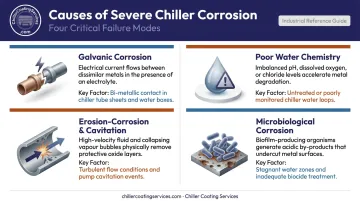
When two dissimilar metals share an electrolytic environment — which cooling water is — the less noble metal corrodes preferentially and at an accelerated rate. In chiller systems, this commonly occurs at tube-to-tube-sheet junctions where copper tubes meet carbon steel or cast iron tube sheets.
The rate of attack worsens when:
- Cooling water conductivity is high (more ions = stronger electrolyte)
- pH falls outside the controlled range
- Repairs or component replacements introduce a new metal pairing not present in the original system design
According to AMPP, galvanic corrosion is defined as damage induced when dissimilar materials are coupled in a corrosive electrolyte — a condition that describes the standard water-side environment inside most chiller water boxes.
Poor Water Chemistry and Inadequate Water Treatment
Cooling water with improper pH, elevated chloride concentrations, or high dissolved oxygen accelerates electrochemical attack on water-side metal surfaces. Trane specifies a pH window of 7.5–9.0, chloride levels at or below 125 mg/L, and sulfate below 35 mg/L for chillers with steel, copper, or stainless-steel heat exchangers. Outside those limits, pitting and widespread surface degradation follow.
The most common real-world contributors:
- Neglected chemical treatment programs or irregular water testing
- Makeup water with high mineral or chloride content
- Systems transitioning through seasonal shutdowns without adjusting treatment protocols
- Extended low-load operation that concentrates dissolved solids
Erosion-Corrosion and Cavitation at Tube Inlets
High water velocity strips away the protective oxide layer on metal surfaces through physical erosion, then allows chemical attack to proceed at dramatically increased rates. Johnson Controls specifies a tube velocity range of 3–12 ft/s for fully loaded evaporator operation — above 12 ft/s, erosion risk increases significantly; below minimum velocity, fouling risk rises and heat transfer drops.
Cavitation — the formation and violent collapse of vapor bubbles under pressure differentials — creates intense, localized pitting at tube sheet faces and impeller areas. Because the pitting pattern mimics chemical attack, it's often misdiagnosed — and treating the wrong cause leaves the actual damage mechanism in place.
Microbiological Corrosion (MIC) in Cooling Water Systems
Microbiologically influenced corrosion occurs when bacteria colonize chiller components and produce corrosive byproducts — organic acids, hydrogen sulfide, and enzymes — that attack metal from beneath biofilm layers. AMPP notes that microorganisms including bacteria, fungi, and microalgae accelerate existing electrochemical corrosion rather than creating an entirely separate process.
Conditions that trigger MIC:
- Stagnant water zones and inadequate biocide programs
- Warm system temperatures during partial loading
- Periods of low or intermittent operation — common in seasonally operated HVAC systems in schools, hospitals, and office buildings
What Happens When Chiller Corrosion Goes Unaddressed
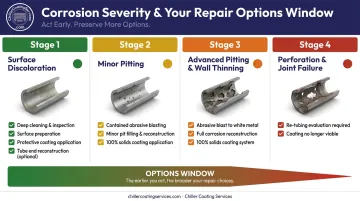
Surface pitting doesn't stay surface pitting. What begins as minor discoloration on a tube sheet progresses through tube wall thinning, perforation, joint failure, and eventual cross-contamination between the refrigerant and water loops. At that stage, replacement is inevitable. The only remaining question is whether it happens on your schedule or the system's.
The operational impacts build incrementally:
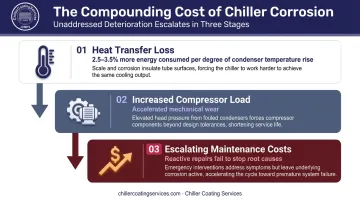
- Heat transfer loss — Corroded, fouled tube surfaces act as insulators. The DOE reports that chillers consume 2.5%–3.5% more energy for each degree increase in condenser temperature, meaning fouling-driven temperature creep directly increases operating costs
- Increased compressor load — The system works harder to compensate for reduced heat exchange, accelerating mechanical wear
- Escalating maintenance costs — Reactive repairs address symptoms; they don't stop the underlying electrochemical processes
Catching these effects early is what determines your options. Here's where to look.
Warning Signs of Active Chiller Corrosion
Visible damage on a tube sheet is often already at an advanced stage by the time it appears during routine checks. Earlier indicators exist, and recognizing them is what separates a manageable surface repair from a full re-tubing bill.
Physical signs to look for:
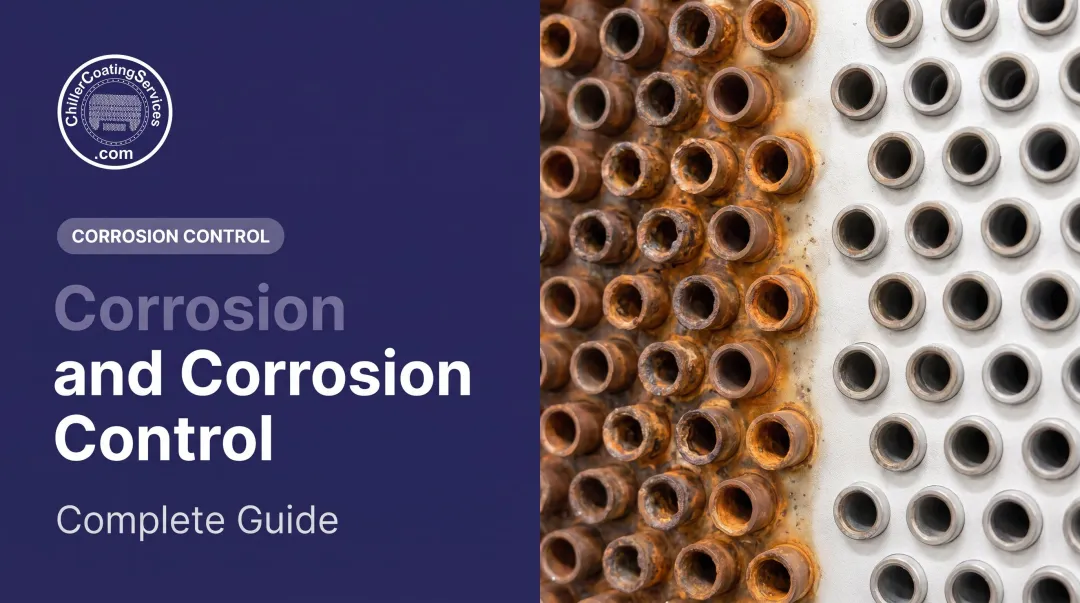
- Discoloration, rust streaking, or pitting on tube sheet faces and tube inlet edges
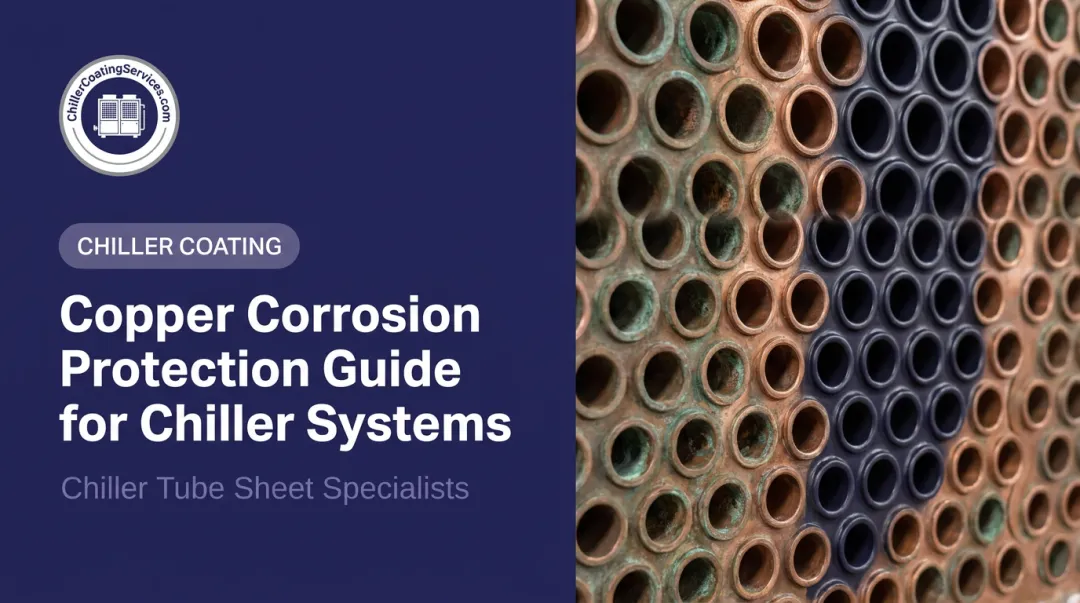
- Green or white deposits at tube ends (indicative of copper or zinc corrosion products)
- Unusual staining patterns around tube-to-tube-sheet joints
Operational and water quality indicators:
- Unexplained decline in cooling capacity or increased compressor run time
- Refrigerant detected in the cooling water loop, or vice versa (cross-contamination)
- Elevated metals content in water analysis reports — copper, iron, or zinc trending upward
- Sudden unexplained drops in system pressure
Trending metal ion levels in water chemistry reports is often the earliest signal of active corrosion. The data shows the problem before the tube sheet does.
How to Prevent Severe Corrosion in Chiller Systems
No single measure controls chiller corrosion reliably. Prevention works through layers: water chemistry management, scheduled physical inspection, professional surface protection, and sound operational practices reinforcing each other.
Implement and Maintain a Rigorous Water Treatment Program
An effective water treatment program for a chiller system maintains:
- pH within the OEM-specified range (Trane: 7.5–9.0 for steel/copper/stainless systems; 8.2–8.5 for systems containing aluminum)
- Chloride below 125 mg/L and sulfate below 35 mg/L
- Corrosion and scale inhibitors dosed to the specific metals in the system
- Biocide program targeting aerobic and anaerobic bacteria to prevent MIC
Proper chemistry addresses three of the four main corrosion causes simultaneously — it reduces galvanic potential, prevents the aggressive ion environment that initiates pitting, and eliminates the biological conditions that support MIC.
Water treatment must run year-round. Suspending programs during low-load seasons is a common mistake that allows chemistry to destabilize and microbial populations to establish. Increase monitoring frequency after any system repair that introduces new materials or when makeup water sources change.
Schedule Regular Tube Sheet and Tube Inspections
Visual inspection of tube sheet faces and tube inlet edges at every planned maintenance interval catches early-stage corrosion while options are still broad. Non-destructive testing goes further: eddy current testing (ECT) identifies sub-surface tube wall thinning before perforation occurs, turning inspection into the primary tool for avoiding expensive surprises.
Manufacturer intervals vary: Trane specifies ECT every 3 years for CenTraVac units; Carrier recommends tube scanning every 5 years. Use the manufacturer's interval as a floor, not a ceiling, for systems operating with known water quality challenges or dissimilar-metal combinations.
Corrosion found at early stages — surface discoloration, minor pitting — can be arrested and coated. Corrosion found at advanced stages often requires partial or full re-tubing. The earlier a problem is caught, the more options remain on the table.
Apply Protective Coatings to Tube Sheets
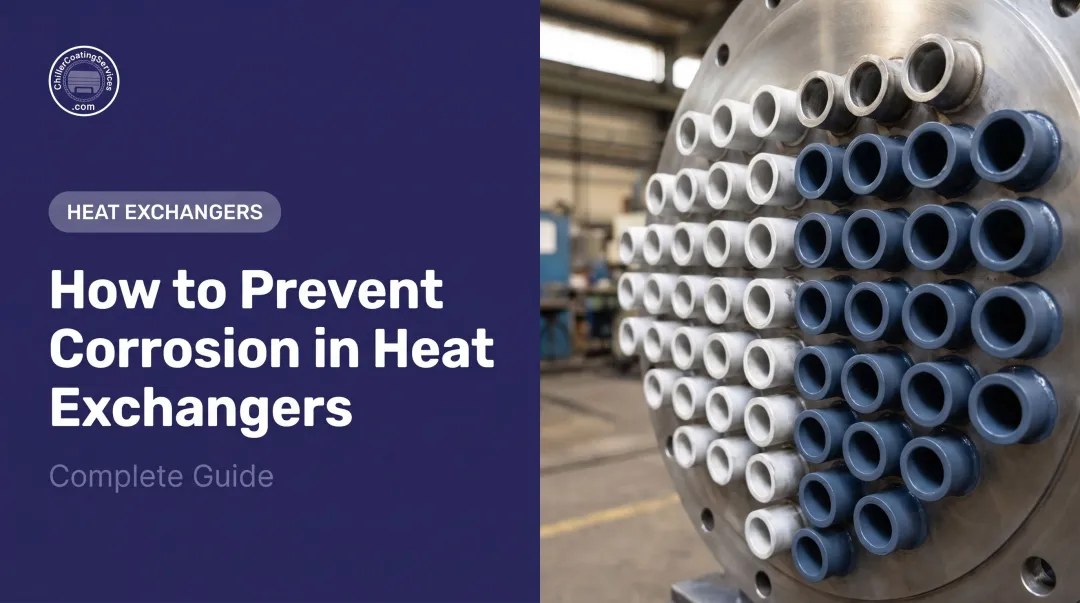
A properly applied protective coating creates a physical, non-conductive barrier between dissimilar metals and the cooling water electrolyte. This directly prevents galvanic corrosion by eliminating the electrolytic pathway between tube and tube sheet metals, reduces erosion-corrosion at tube inlets, and prevents coolant contamination.
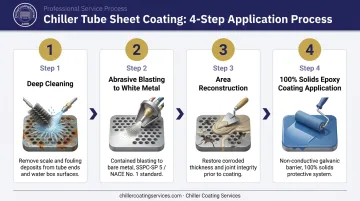
Chiller Coating Services applies a proprietary 100% solids epoxy coating system specifically formulated for chiller water-side service. The process matters as much as the coating itself:
- Deep cleaning to remove scale, fouling, and contamination
- Contained abrasive blasting to white metal finish (SSPC-SP 5 / NACE No. 1 standard) — complete removal of rust, mill scale, and foreign matter to ensure adhesion
- Reconstruction of severely corroded areas to restore tube sheet thickness and joint integrity before coating is applied
- 100% solids non-conductive coating application — creating the galvanic barrier and sealing the surface against chemical and biological attack
Quick-cure technology keeps downtime short. Hospitals schedule service during low-load shoulder seasons, schools during summer break, and data centers sequence one chiller at a time to preserve N+1 or 2N cooling redundancy.
Professional coating application also improves tube-to-tube-sheet joint strength and creates smoother surfaces that reduce fouling and inlet turbulence over the life of the equipment.
Coating is most critical during planned maintenance outages, when inspections reveal early-stage corrosion, when dissimilar metal combinations are present in the system, or when a chiller is being refurbished rather than replaced.
Control Flow Velocities and Address Cavitation Sources
Flow-related damage strips protective oxide layers from tube surfaces, accelerating every other corrosion mechanism. For older systems modified from their original flow conditions, this is often the missing piece that allows other problems to compound.
Corrective steps include:
- Verify water flow velocities through condenser and evaporator tubes are within manufacturer-specified ranges
- Install inlet ferrules or tube inserts where erosion is concentrated at tube inlets
- Review pump and valve configurations to confirm they don't create pressure differentials that produce cavitation
Tips for Long-Term Corrosion Control in Chiller Systems
For facilities teams looking to maintain corrosion control over equipment lifetime, these four practices separate reactive maintenance from genuine equipment longevity:
- Track metal ion levels (copper, iron, zinc) in a documented water quality log. Trending values are often the first corrosion signal — appearing well before visible damage shows up
- Train maintenance staff to recognize the visual stages of chiller corrosion: surface discoloration, pitting, and deposit buildup. Establish a clear escalation protocol for when a specialist assessment is warranted
- Schedule inspections around seasonal transitions — water chemistry is most likely to destabilize, and microbial populations most likely to take hold, during recommissioning after extended low-load or shutdown periods
- Maintain complete service records covering inspection findings, coating applications, water treatment data, and material changes — these records become critical during audits and accelerate future diagnostics
Structured documentation matters more than most teams realize. Chiller Coating Services provides formal service records designed to support Joint Commission/CMS audits for healthcare facilities, SOC 2 and uptime audits for data centers, ISO/FDA/GMP compliance for manufacturing and pharmaceutical sites, and NERC reliability documentation for power generation — reducing diagnostic time and keeping compliance reviews straightforward.
Conclusion
Severe chiller corrosion has identifiable causes — galvanic reactions, poor water chemistry, erosion-cavitation, and microbiological activity — and none of them develop overnight. That time gap between onset and serious damage is the practical window for intervention.
A layered prevention strategy combining rigorous water treatment, scheduled inspection with eddy current testing, and professional tube sheet coating protects the significant capital investment that chiller systems represent. Given that a 300-ton chiller carries a 23-year energy cost that can exceed $600,000 depending on operating efficiency, even modest losses in heat transfer efficiency carry a real financial cost — and restoring that efficiency through proactive protection delivers a measurable return.
Reactive maintenance after failure costs more, takes longer, and leaves the root causes intact. Addressing corrosion before it reaches critical severity is the only approach that reliably protects both the equipment and the budget behind it.
Frequently Asked Questions
What does severely corrosive mean?
"Severely corrosive" describes rapid or advanced-stage corrosion. In chiller systems, it means deterioration has moved beyond surface oxidation to actively compromise metal thickness, structural integrity, or tube-to-tube-sheet joint integrity.
What are the three types of corrosion?
Three commonly referenced types are uniform corrosion (attack across the entire surface), pitting corrosion (localized deep cavities), and galvanic corrosion (driven by dissimilar metals in an electrolyte). All three can and do occur in chiller systems, often simultaneously.
What does severe corrosion look like?
Look for deep pits or craters on metal surfaces, heavy rust or oxide deposits, holes or perforations in tube walls, green or white corrosion products at tube joints, and significant material loss at tube sheet faces or tube inlet edges.
What causes corrosion in chiller systems specifically?
Four primary causes drive corrosion in chiller systems:
- Galvanic reactions between dissimilar metals at tube-to-tube-sheet junctions
- Poor cooling water chemistry — pH imbalance, elevated chlorides, dissolved oxygen
- Erosion-corrosion and cavitation at tube inlets from high-velocity or turbulent flow
- Microbiological corrosion driven by bacteria in the water loop
How often should chiller tube sheets be inspected for corrosion?
Visual inspection should occur at every planned maintenance shutdown — at minimum annually. Eddy current testing intervals vary by manufacturer: Trane specifies every 3 years, Carrier every 5 years. Increase frequency for older systems or those with known water quality challenges.
Can corroded chiller tube sheets be repaired, or do they need to be replaced?
Early- to mid-stage corrosion can often be addressed through surface preparation, reconstruction of degraded areas, and professional coating application to restore functionality and extend service life. Advanced corrosion with through-wall tube perforations or severely compromised joints typically requires partial or full re-tubing.